How to Find a Technical Co-Founder: A Step-by-Step Guide
- Updated: Aug 27, 2024
- 11 min

CEO
Finding the right technical co-founder can be a make-or-break for any startup.
If you’re an entrepreneur or investor struggling to build out your tech talent, this article will give you the inside scoop on how to find a tech cofounder.
Here, we’ll cover:
- Who is a technical co-founder
- When you really need one
- The role of a CTO
- Where to look for technical co-founders
- A step-by-step guide to hiring a tech cofounder
- How much equity to provide
- Tips for choosing a stellar tech leader
Let’s get right to it!
Transform your ideas into reality with our dedicated development team — contact us to get started today!
What is the Role of a Technical Co-Founder?
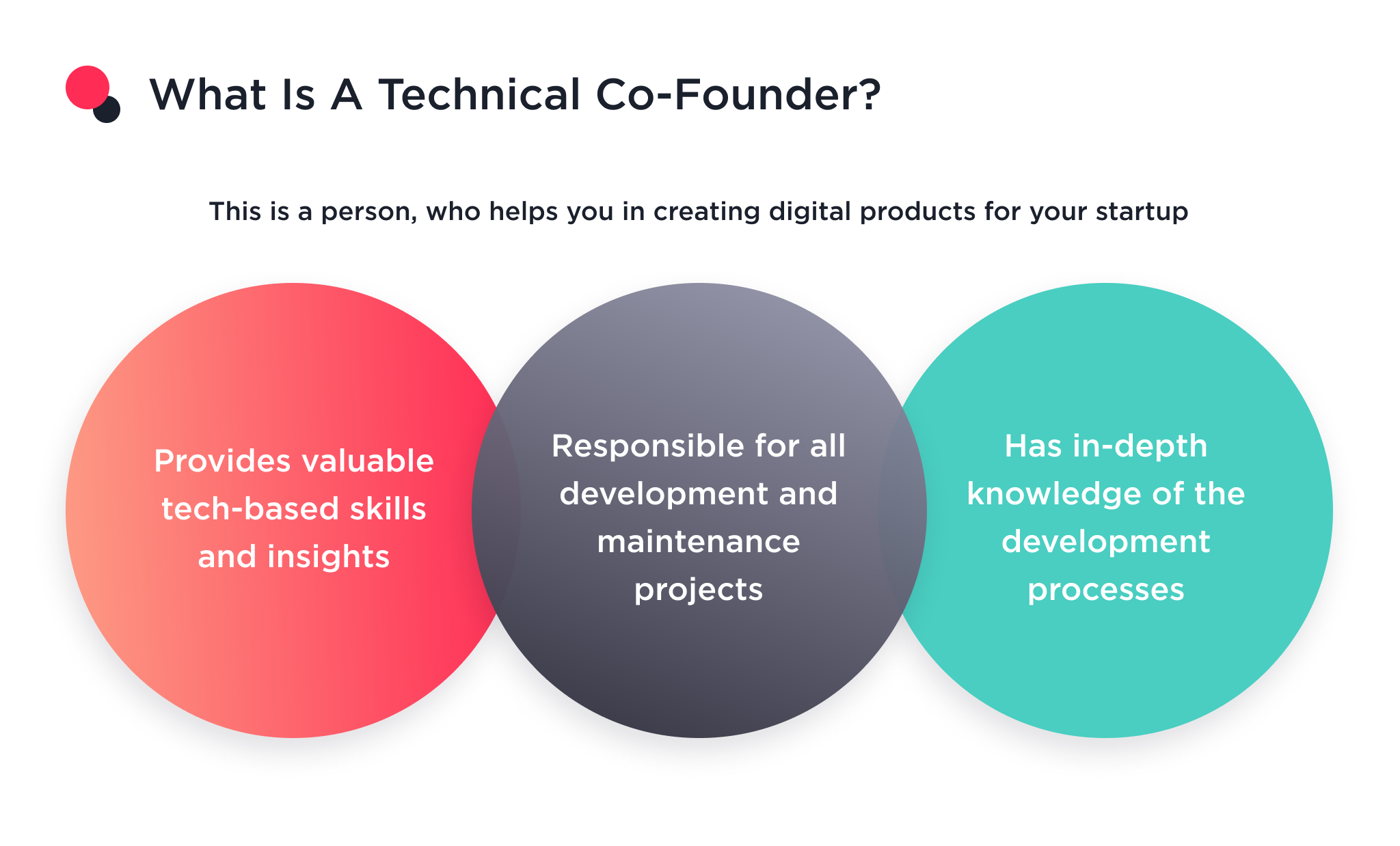
A technical co-founder is a startup partner who helps create relevant digital products. This is a person who provides valuable tech-based skills and insights.
Ideally, this individual should be very committed to taking responsibility for all development and maintenance projects and have in-depth knowledge of the processes involved here.
I must note here that having a tech co-founder isn’t always critical, particularly for startups in non-technical industries, low-code/no-code businesses, or those heavily relying on outsourced development.
However, this doesn’t apply to every type of startup.
For tech-heavy products (like SaaS products, AI, or deep tech), having a technical co-founder often improves product quality, speed to market, and investor confidence.
We’ll consider some proven cases where you don’t need one to save time. Perhaps, you could just hassle through it all by yourself.
When Can You Manage a Startup Without A Tech Cofounder?
One common reason non-technical founders skip bringing on a tech co-founder is when they want to quickly test their idea with a PoC, MVP, or prototype. But that’s not the only case. If your business isn’t deeply tech-driven, or if you plan to work with agencies or no-code tools, a tech co-founder might not be a must-have.
Alternatives to Hiring a Technical Co-Founder
Here are some alternatives if you’ve decided not to move on with hiring a tech cofounder for your startup:
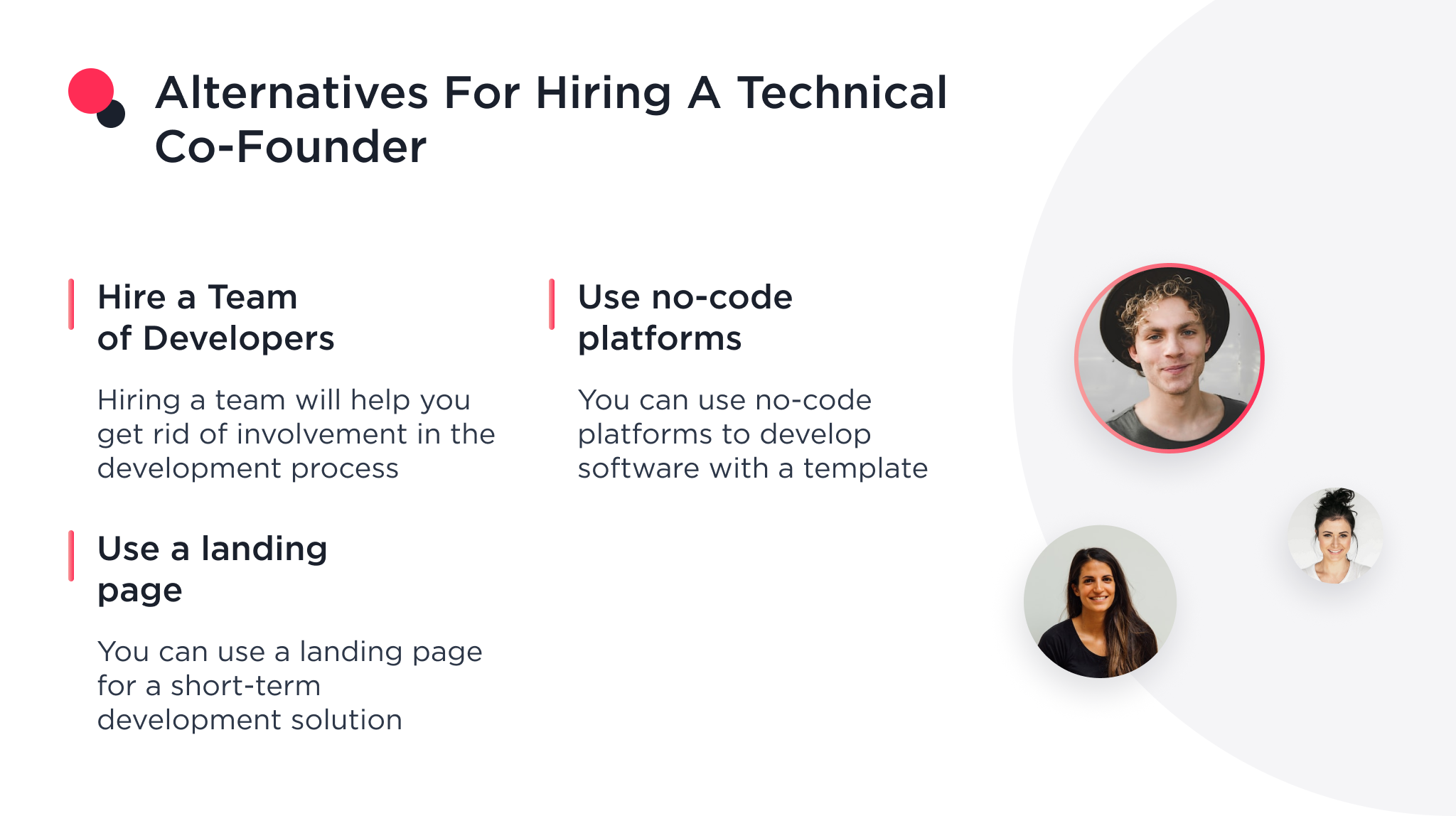
Hire a Senior Developer or a Team of Developers
You can hire a software engineer with in-depth knowledge of the process of creating your desired minimum viable product.
There are multiple hiring models to consider. However, it’s best to hire a dedicated development team that can work laser-focused on your MVP, within a stipulated time frame.
Dedicated teams are ideal as they can be made to work for a short timeframe, fitting the objective of the MVP.
Use No-code Platforms
No-code platforms are easy-to-use software systems that provide a template for non-technical users to execute software without technical knowledge required.
These platforms use drag-and-drop features, allowing builders to visualize the entire implementation process and quickly determine the user experience.
Use a Landing Page
Also, you can create a basic landing page with a website builder. Although this requires technical knowledge of either a website builder like WordPress, Wix, etc., or programming languages like HTML, CSS, and JavaScript.
However, the expectation isn’t much, and development can be fast.
Irrespective of your preferred option, you still need in-house expertise. Either a CTO or a full-stack internal developer will suffice.
Making the right choice is crucial. Here’s everything you need to know about in-house development vs. outsourcing.
When Do You Need To Bring On A Technical Co-Founder?
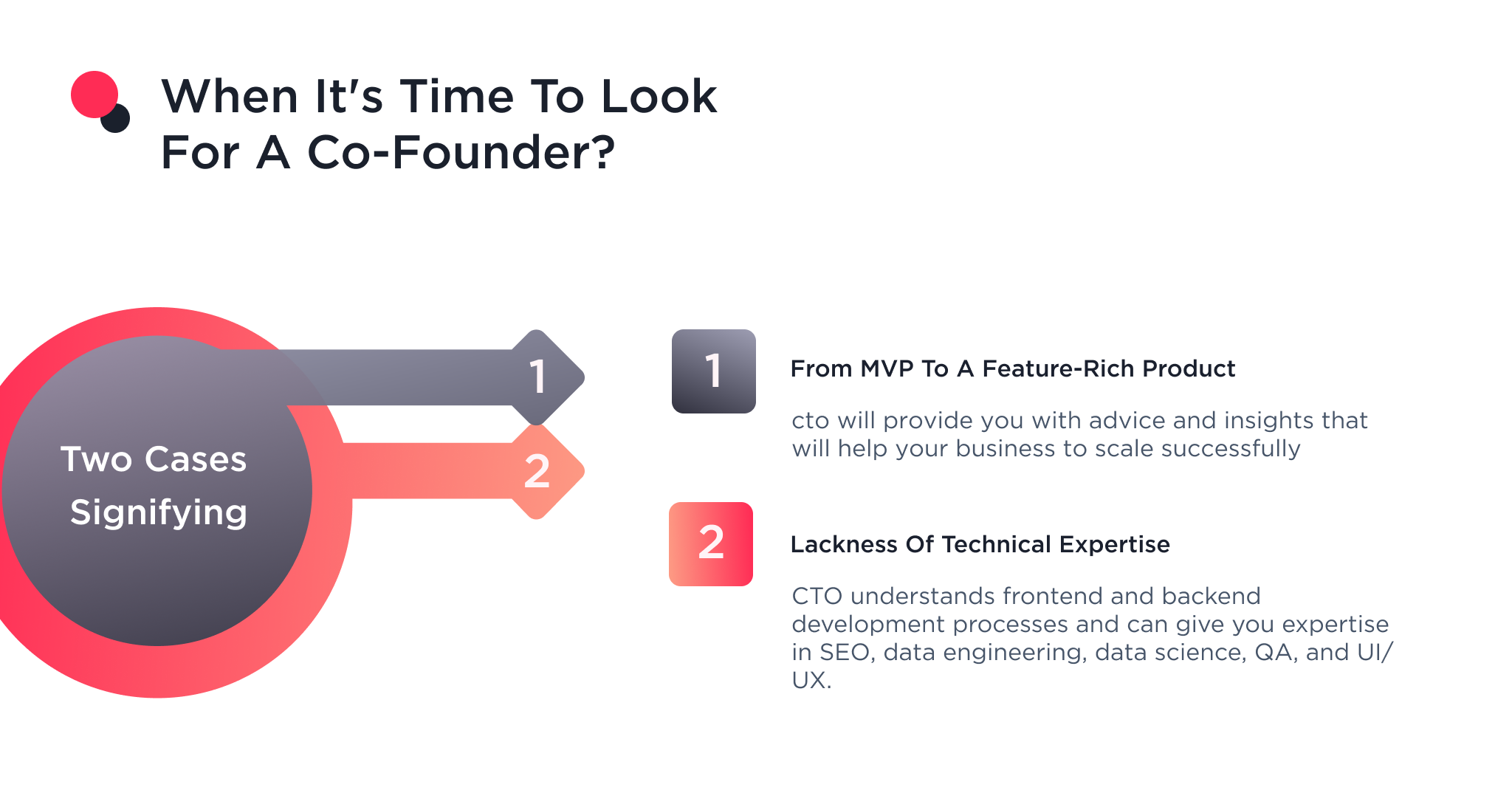
Having a tech co-founder can be immensely beneficial. But how do you spot when you need one? Here are two cases signifying it’s time for software startups to partner with a co-founder.
Case 1: Scaling an MVP into a Full-Fledged Product
In this case, the founder has just an idea to create a website or mobile app, but lacks the technical knowledge to develop the product.
So, it’s best to partner with a virtual CTO on demand rather than hire a full-time expert. The first option offers you cost-effective skill expertise.
After validating your idea via a string of successful MVP feedback from your target users, the CTO will provide you with insights on adjustments.
The CTO will ensure that you have a robust software architecture that can handle planned scaling, oversee in-house workflow, and oversee IT outsourcing companies.
According to Startup Genome, premature scaling is a leading cause of startup failure, so having a seasoned CTO’s guidance during this stage can make the difference between growth and collapse.
Case 2: Lacking the Technical Skills to Build Your Product
If your idea is validated and you have the budget, but you lack the technical know-how to turn it into a real product, this is when bringing in a technical cofounder makes sense. You’ll need someone who can lead the development of your web or mobile app and make sure it’s built right from the start.
Ideally, you want a full-stack CTO, someone who understands both frontend and backend development. They don’t have to be an expert in everything, but having a working knowledge of areas like data engineering, data science, quality assurance, UI/UX, and even SEO can help them make smarter decisions and manage the team effectively.
Now that you know when exactly to hire a CTO, you’re probably more curious about the specifics of the roles they’ll play.
What Role Does A CTO Play?
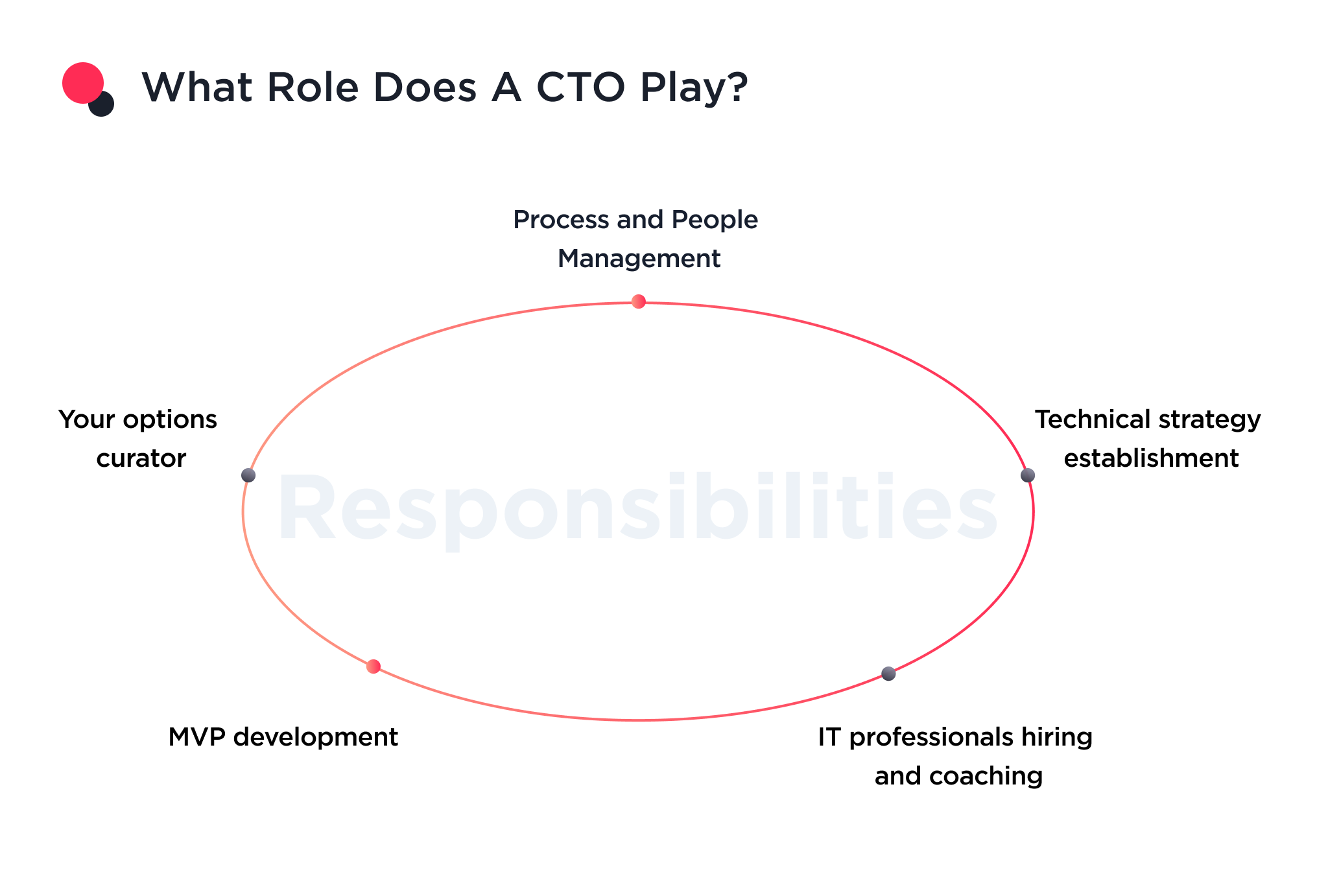
For early-stage startups, a Chief Technology Officer (CTO) is much more than a tech lead. They’re responsible for shaping the startup’s technology vision and ensuring the product aligns with business goals. Their key roles typically include:
- Defining the technical strategy and roadmap based on the startup’s goals.
- Designing the system architecture and selecting the right technology stack.
- Building, managing, or overseeing development teams, whether in-house, outsourced, or hybrid.
- Ensuring product scalability, security, and maintainability.
- Bridging the gap between technical execution and business strategy.
For early-stage founders, a CTO often wears many hats. They are acting as a tech strategist, hands-on engineer, and team leader all at once.
| Task | Description |
| People and process manager | Just like other C-level team members, they manage team members and map out their workflow.
One example of the process it can manage is mobile app development, which entails:
|
| Technical strategy establishment | The CTO understands the company’s business model and establishes the technical strategy needed to achieve that aim.
For example, they guide SEO strategy for most new startups. |
| Your options curator | CTOs find options for technical impediments in the development and maintenance process. |
| MVP development | Many early-stage startups require a CTO with full-stack development knowledge and who can create the product from scratch.
They’re primarily responsible for the overall quality of the solution. |
| IT professionals hiring and coaching | CTOs, in conjunction with the human resource teams, test prospects’ technical skills and coach them. |
Where To Find Technical Cofounder Candidates
You can search for a tech co-founder through your existing network or by using a free online platform designed for startup founders.
Online, explore co-founder matching platforms like CoFoundersLab, Founders Nation, or AngelList. You can also connect with potential partners through LinkedIn, startup communities, online meetups, or even targeted search engine queries.
Offline, it’s often harder but still worth tapping into your existing network — friends, business contacts, hackathons, or referrals from trusted partners. Sometimes the right connection comes from a personal introduction, not a platform.
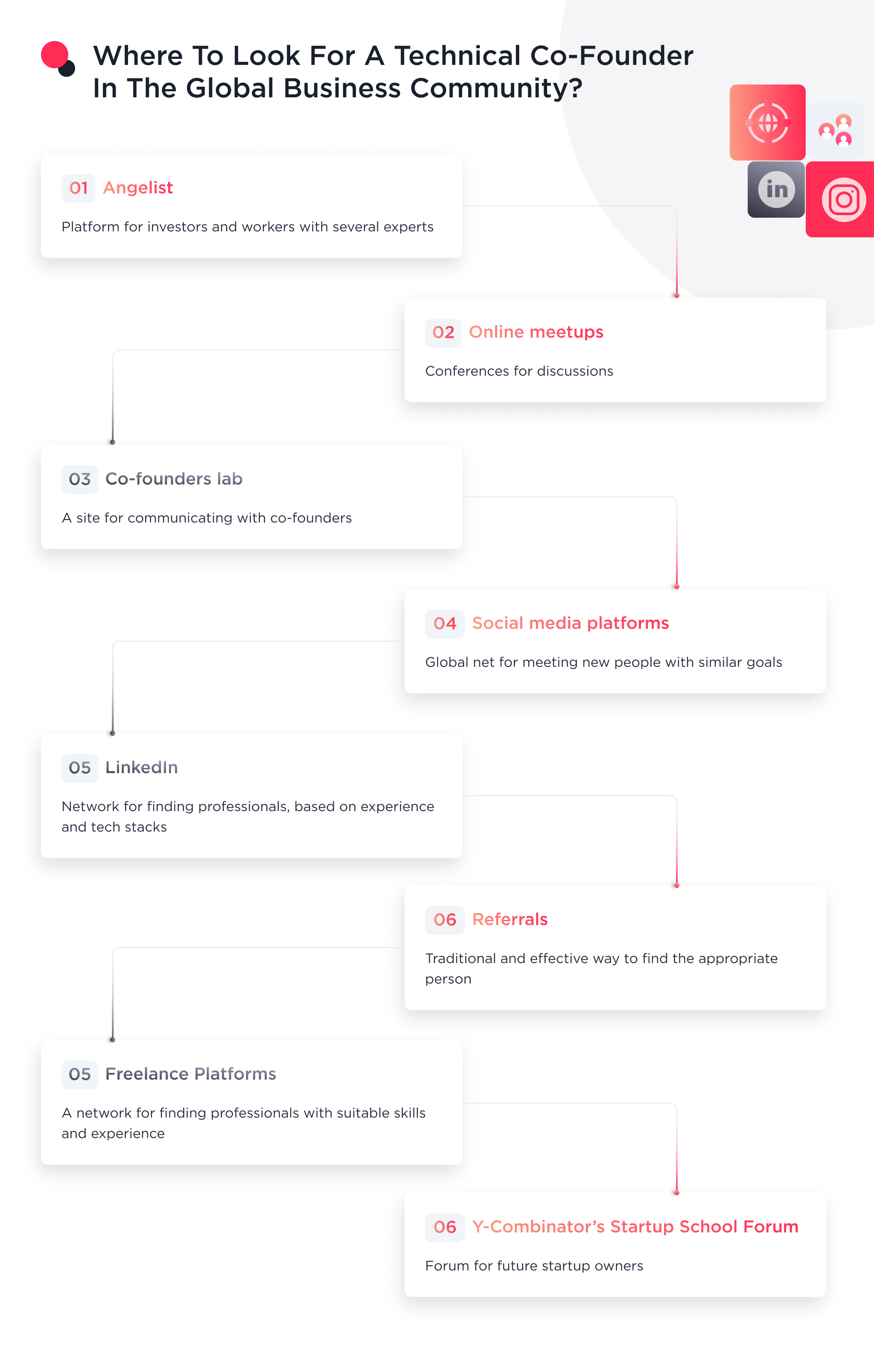
| Where to аind | Description |
| Angelist | Angelist is a platform that connects startups with investors and workers.
There are multiple tech experts on AngelList, some of whom are open to taking CTO roles. |
| Online meetups | These are conferences held to discuss a specific subject. Examples of meetups are IndieHackers, OnlineGeniuses, and the UK Startup Conference. |
| Co-founders lab | This is arguably the most prominent website to meet and connect with co-founders operating in any niche. |
| Social media platforms | Social networks allow you to communicate with people, share ideas with them, and listen to their opinions.
Once you do that, you can know if a prospective co-founder is fit for your idea. |
| LinkedIn is a network for professionals to connect with themselves and organizations.
You can search for professionals based on experience and tech stacks to communicate with one who best suits your startup’s needs. |
|
| Referrals | Over 40% of human resource additions happen via referrals.
This is a traditional, effective way of finding talent for organizations. You can ask within your circle of influence for referrals on highly experienced and talented technical experts. Speak with them, and see if they’re willing to join your company. |
| Freelance Platforms | You can find technical co-founders on freelance platforms like Upwork, Fiverr, etc.
Before asking them to join as a co-founder, check their reviews, vet their skills, and ensure that they’re passionate about your idea. |
| Y-Combinator’s Startup School Forum | This is a forum for individuals interested in owning a startup and are keen on learning something via Startup School.
You can easily find a suitable co-founder by approaching a person of interest on the site. |
How To Choose A Technical Co-Founder
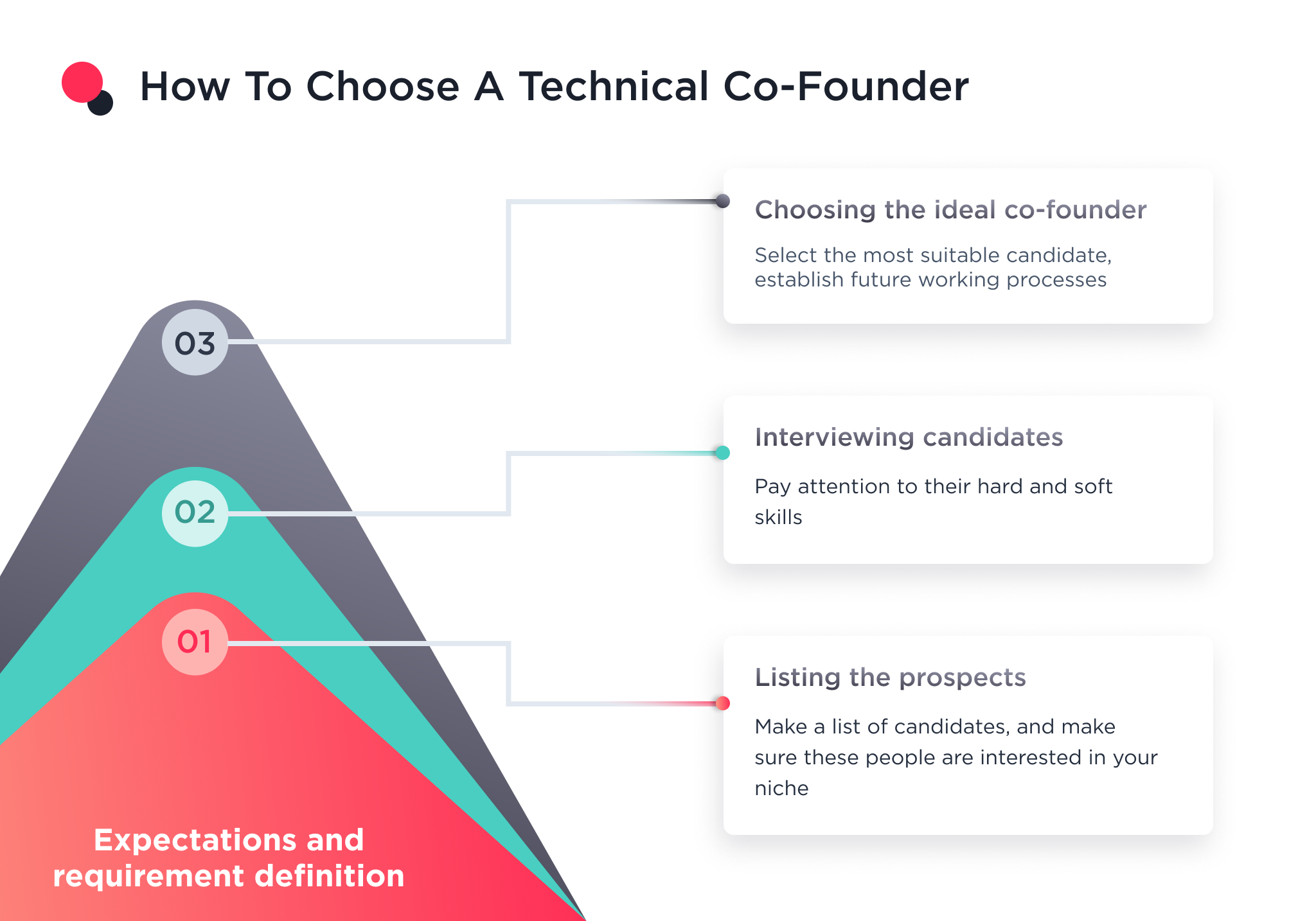
To choose the right partner as a non-technical co-founder, ensure that you stick with these steps:
- Define all expectations and requirements
- Set up a list of markers
- Interview prospects
- Compare and choose the most preferred talent
Let’s discuss each point in detail.
Step 1: Define Must-Have Skills and Experience
Once you’re certain that your startup requires a co-founder, the next step is writing a detailed description of the ideal co-founder your organization needs.
Answer the following questions:
- What skill set should your perfect technical partner possess?
- What’s the best personality trait?
- Would you instead opt for experience in a specific niche?
According to Entrepreneur, a complementary co-founder is the first trait to consider when building a successful founding team.
As such, ensure that you aim for a technical co-founder whose characteristics complement the diversity in your skill sets, background, and experiences.
Step 2: Research Prospects
Once you know what kind of co-founder you’re looking for, start building a list of potential candidates. The more names you gather, the better your chances of finding the right fit.
Before reaching out, make sure each person on your list actually understands, or shows interest in, your startup’s industry and mission. It’s important they have at least a basic grasp of what your business is about and the role you’re offering.
By setting clear expectations upfront, you’ll avoid wasting time on conversations with people who aren’t a good match for your niche or the responsibilities you need them to take on.
Step 3: Interview Promising Candidates
Once you’ve highlighted some potential co-founders that pique your interest, start scheduling interviews with them. You may do this online or offline.
Vet the following while interviewing prospects:
- Software development prowess
- The capacity to build a technical team
- Product development strategies
- Knowledge of algorithms, varying programming languages, and frameworks
- Communication skills
- Interest in your startup idea
- Ensure you’re like-minded people
- Past entrepreneurship experiences
- Amount of equity they’re requesting
- Availability.
Step 4: Decide on the Best Fit
Compare your options based on the answers to your interview questions. And from the least of prospects, select one that best aligns with your technical and business needs.
Once you’ve chosen a co-founder, do the following:
- Establish a transparent communication medium. Especially for remote partnerships.
- Agree on the share vesting process and percentage ownership.
- Clarify short-term and long-term goals.
- Agree on shared and individual responsibilities.
- Establish key performance indicators to track growth.
Crafting Custom Mobile Apps That Delight Users!
How Much Equity Should You Offer to a Technical Cofounder?
The outstanding equity to share with your technical cofounder depends on their contribution and qualifications.
For example, the tech cofounder may opt for about 50% equity in the business in startups whose core focus is around technical innovation.
There are multiple methods to calculate your equity ratio. One such method is the Founder’s Pie calculator
Here, the emphasis is on distributing shares fairly via several differently weighted metrics based on their importance in forming the startup.
For a hi-tech startup, the ideal weight should be around.
| Aspect | Weight |
| Idea | 7 |
| Risk and commitment | 7 |
| Responsibilities | 6 |
| Technical expertise | 5 |
| Business plan | 2 |
Score each cofounder based on their score, and allocate equity based on that. Alternatively, you can simply use your instinct as a means of judging who gets what.
7 Actionable Tips For Recruiting Tech Talent
To choose the best cofounder, it’s imperative to approach the search, selection, and onboarding process with top-notch insights. Oftentimes, HR professionals use digital onboarding solutions to streamline and speed up the process.
To help you achieve your aim of hiring the most seasoned partner, here are some tips to consider:
- Hire a co-founder who believes in your idea
- Opt for a co-founder with complementary qualities
- Tech partners must have the needed skill set
- Prioritize reliability
- Undertake a test project
- Favor tech partners with previous joint work history
- Similar work ethic
Let’s break down each point.
Tip 1: Seek Out True Believers
Opt for someone who believes in your objectives, goals, and overall concept of your idea enough to take requisite risks.
Ask yourself the question: Is the co-founder equally obsessed with solving this problem?
They ensure your mission and objectives are well incorporated into the development workflow, and your UI/UX designs appropriately depict your brand.
A strong brand strategy helps startups grow faster. Here’s a step-by-step on building a brand from scratch.
Tip 2: Complimentary Strengths Are Key
Look for co-founders who complement your character.
For example, opt for a conservative co-founder if you’re a risk taker.
If you’re a cautious person, seek a bold and charismatic partner.
The purpose here is to onboard a partner that brings new strengths to your team, including counterbalancing ideas and a new mindset.
Tip 3: Fill Your Team’s Skill Gaps
The higher your partner’s skill set, the better. A statistic by HBA Accelerator suggests that a balanced team with a technical founder and a business founder will raise 30% more than a one-person startup.
Thus, choose a partner whose skill set does not duplicate your area of expertise.
For example, if you’re knowledgeable in sales and project management, it’s best to opt for a technical co-founder with a skill set that complements your own.
Need a remote team to support your project? Check out our guide on how to hire a dedicated remote team for top results.
Tip 4: Reliability is Critical
A reliable co-founder is one you can trust to complete specific tasks and offer timely input to development.
Your co-founder must be skilled in requisite stacks to handle all technical activities needed to develop, maintain, and optimize your product.
In addition, they should also be willing to devote the time required to bring projects to fruition.
It’s the compendium of skill and time that defines a reliable co-founder.
Tip 5: Test Fit With a Pilot Project
Test the prospective co-founder’s tech expertise by providing them with a test project. Accessing someone is easier when you’re creating a live app or website.
While developing the side gig, consider how the person operates under pressure.
Are they solution-minded? How do they act in conflict? Challenges often reveal people’s true colors and allow you to know them better.
Tip 6: Align Work Styles
According to Harvard Business Review, mismatches in work hours and efforts often result in resentment.
As such, make sure you choose a co-founder with a similar work ethic. They should be willing to dedicate lots of time to making your solution a reality.
Tip 7: Shared Work History Helps
If possible, choose a co-founder you’ve successfully worked with before. A shared history builds trust and makes collaboration smoother, especially if you’ve already launched a product together.
Follow these tips, and you’ll have a clear roadmap for finding the right technical co-founder for your startup.
Ready To Find A Technical Co-Founder?
If tackling this alone still seems daunting, SpdLoad offers CTO-as-a-service to provide the technical leadership your team is missing.
We’ve helped dozens of startups build and launch innovative products. One glance at our portfolio and reviews on Clutch makes our expertise clear.
Rather than continuing the tedious search for technical talent, bring an instant co-founder on board with SpdLoad. Our on-demand CTO services give you the technical firepower and guidance to turn your ideas into reality.
Contact us today to get started with a world-class team of CTOs and developers.
Partnering up for app development? Here’s what to keep in mind for a productive app development partnership.