The Best SaaS Trends to Monitor for Business Success in 2026
- Updated: Mar 18, 2026
- 19 min

CEO
The top SaaS trends in 2026 are centered around smarter automation, more personalized user experiences, and tools that help businesses move faster with less effort. Companies in the SaaS industry are leaning heavily into integrating AI, stronger data security, and simple onboarding experiences to keep users engaged from day one. SaaS providers should incorporate these trends if they want to make their SaaS products useful and stay competitive.
Sounds simple, but at this point, stuff like AI integration, personalization, automation, etc., sounds more like buzzwords, and it’s really hard to understand the real use cases and implementation strategies that will actually make those things work.
So we wanted to do something different with this article. Instead of throwing every possible SaaS trend at you, we’re going to walk through nine specific shifts that will actually affect your revenue growth, how well you keep users around, and where you stand against competitors in 2026.
We didn’t mean to impress you with buzzwords. The SaaS trends mentioned here are more like strategic moves. They are backed by real data and our experience in SaaS app development.
Whether you’re a SaaS startup at the very start of your journey or you’re already scaling your SaaS solution, take a moment to check out these latest SaaS trends and see if they are worth implementing in your specific case.
Let’s talk about what really matters for your business.
Let's shape your startup's product vision together!
SaaS Industry Overview: What is the Future of SaaS?
As a company that has been providing SaaS development services for over 11 years, there is one thing we can tell for sure. The SaaS landscape has really changed. There are many more SaaS services than ever before.
The SaaS state of industry report from Better Cloud discovered that companies today are juggling an average of 105 SaaS applications. Just think about that for a second. Back in 2018, it was only 16. And we’re talking about a market that’s closing in on $400 billion. These big numbers represent a completely different landscape than what we had even a few years ago.
What’s even more important than SaaS market growth is how customer expectations have shifted. Your users today? They want software that gets their workflow, that plays nicely with the tools in their existing business systems, and that starts delivering value immediately, not after weeks of setup and training.
So, the question arises: how can companies in the SaaS sector meet those needs and stay competitive? Unfortunately, there is no one-and-for-all answer, but the following trends in SaaS can point you in the right direction. 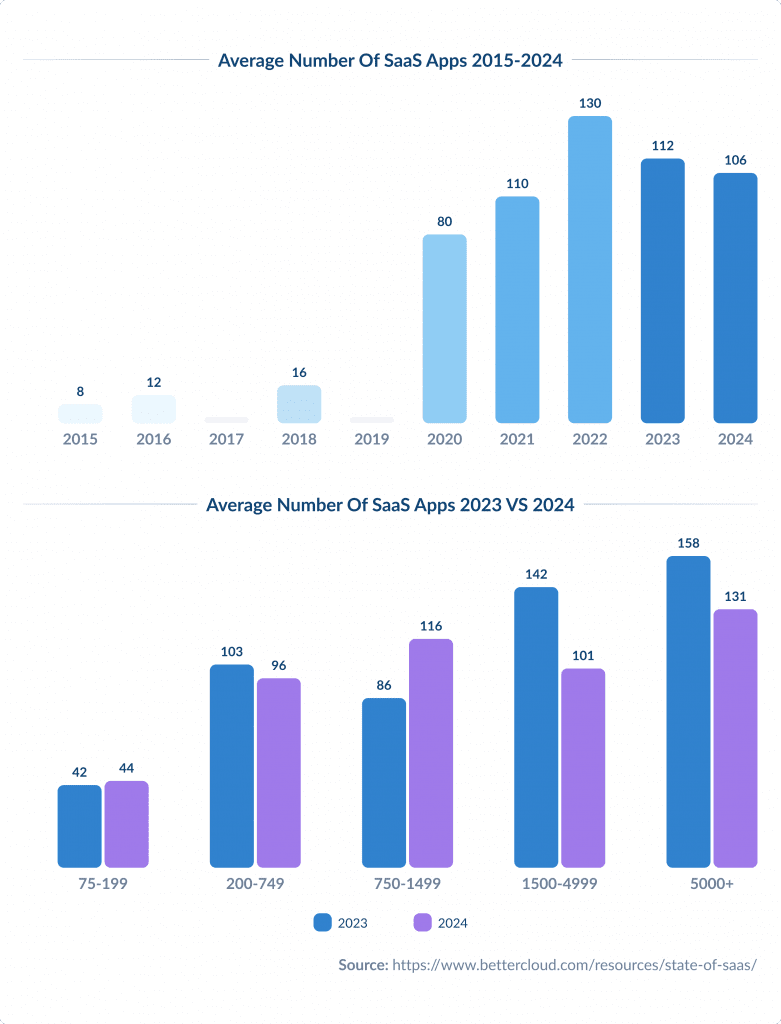
Top SaaS Trends for 2026 and Beyond
If you’re building a SaaS product or thinking about entering this space, you’ve got to know where this industry’s going. That’s the key ot the SaaS success. So what matters in the SaaS industry right now? I’ve been tracking a few SaaS trends that are worth your attention.
Here is a brief overview ot the top SaaS trends ot look at:
| Trend | What it means | Why it matters in 2026 | Example / Application |
|---|---|---|---|
| AI-Powered Personalization | Software adapts automatically to each user’s role, behavior, and workflow |
|
|
| Vertical SaaS Domination | Industry-specific software built for niche needs instead of general use cases |
|
|
| Embedded Analytics & Data Democratization | Data analytics delivered inside the product, so users never need external business intelligence tools to understand data |
|
|
| API-First Architecture & Integration Ecosystems | Products built with seamless integrations in mind from day one |
|
|
| Usage-Based & Hybrid Pricing Models | Customers pay based on actual consumption, or a mix of base subscription + usage |
|
|
| Compliance as a Competitive Advantage | Treating SOC 2, HIPAA, GDPR, ISO 27001 as strategic assets |
|
|
| Enhanced Onboarding & Time-to-Value | Fast, adaptive onboarding that guides users to early wins within minutes. |
|
|
| Zero Downtime & Performance as Differentiators | Products that deploy updates silently and deliver consistently fast performance. |
| Real-time healthcare, fintech, or global SaaS platforms require safe, continuous operation. |
Now, let’s explore each trend in more detail to see how it shapes current SaaS trends and influences rising user expectations.
1. AI-Powered Personalization Beyond Chatbots
The chatbot era of AI feels almost quaint now. In 2026, AI personalization will go far deeper than automated responses to customer questions. We’re talking about tailored solutions that genuinely learns how each user works and adapt themselves accordingly to create experiences that feel custom-built for every person who logs in.
According to Salesforce’s research, 73% of customers now look for companies to understand their needs and expectations. And the businesses meeting these expectations are seeing real results: AI-driven personalization can boost customer retention by up to 30%. This is especially beneficial for e-commerce businesses.
Think about what this looks like in practice. Let’s take a project management tool as an example. It can be upgraded to show a personalized dashboard for each role. For a team lead, it surfaces team productivity metrics, upcoming deadlines, and resource allocation insights.
For a developer on that same team, it highlights their assigned tasks, relevant documentation, and collaboration notifications. Same product, completely different interface, because it is automatically adjusted based on role, behavior patterns, and historical usage.
This use case extends to onboarding flows that adapt in real time. If a user breezes through basic features, the system recognizes this and accelerates to advanced capabilities or offers to integrate advanced tools. If someone struggles with a particular concept, the platform offers additional context or suggests a different approach.
How does it work?
The technology behind this includes predictive analytics that anticipate what users need before they ask for it. Your customer relationship management (CRM) might notice that every Friday afternoon, you pull the same report. By the third week, it starts generating that report automatically and has it ready when you need it. These micro-predictions compound into significant time savings and a fundamentally better user experience.
For SaaS businesses, implementing this level of personalization requires solid technical infrastructure. You need clean data architecture, real-time processing capabilities, and thoughtfully designed machine learning models.
This is where building with the right partner matters, someone who understands both the AI capabilities and the practical implementation challenges. If you are looking for SaaS developers, our team has got you covered. Feel free to book a call with me to discuss your project. We can operate as the extension of your in-house team or work as a white label SaaS development partner.
2. Vertical SaaS Domination
A dental practice doesn’t want a generic CRM. They want software that handles patient records, insurance claims, appointment reminders, and treatment tracking — all in one place, and designed specifically for dentistry. That’s the essential insight we’ve got when developing a custom CRM for dental clinics. Here is a little sneak peak into the rersonalized design we’ve developed for the client: 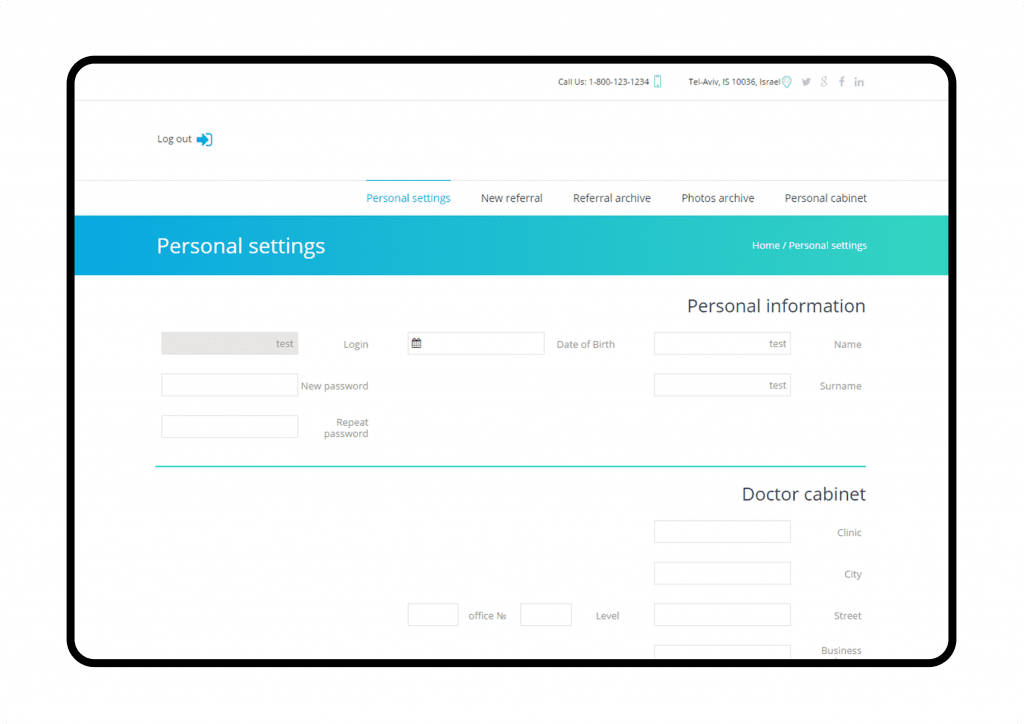
And it is applicable to any other industry.
The reason is straightforward: specificity creates value. When you’re running a construction company, you don’t want to configure a generic project management tool to understand permitting, subcontractor management, and material tracking.
You want software that already knows your industry inside and out. Vertical SaaS commands 2–3 times higher contract values than horizontal tools in many industries because businesses are willing to pay a premium for solutions that feel purpose-built for their needs.
The opportunities for vertical expansion are substantial, too. Some vertical SaaS companies have achieved market penetration as high as 50-61.5% in their target industries, like Shopify, capturing about 29% of all e-commerce websites, or Mindbody dominating fitness management with 61.5% market share. When you own a vertical, you can introduce complementary products that horizontal players would struggle to imagine, let alone execute properly.
The shift toward vertical SaaS doesn’t mean horizontal products disappear. It means businesses are increasingly asking, “Does this software truly understand my industry, or am I being forced to adapt my workflows to someone else’s generic vision?” In 2026, the answer to that question determines which products win deals and which ones get passed over for specialized alternatives that speak the customer’s language from day one.
3. Embedded Analytics and Data Democratization
Here’s a frustration that nearly every software user has experienced: you’re working in your marketing platform, you need to understand campaign performance, so you export a CSV, open Excel, create pivot tables, build charts, and try to make sense of what’s working. By the time you have answers, the moment to act has passed.
That workflow is dying. In 2026, 75% of customer-facing applications will include embedded analytics, and 81% of analytics users now prefer embedded solutions over standalone tools. The shift is clear: users want insights without leaving the platform where they’re actually doing their work.
Embedded analytics means your data analysis tools live inside your application. A sales rep sees pipeline health and deal velocity right in their CRM. A marketing manager watches conversion metrics alongside campaign settings. A finance team reviews spending patterns in the same interface where they approve expenses. No context-switching, no waiting for reports, and the best thing – no technical skills required.
The business impact of implementing embedded analytics is substantial. Companies implementing self-service embedded analytics see 41% higher feature adoption rates. This is because when users can answer their own questions instantly, they engage more deeply with the product. Applications with embedded analytics process user requests 47% more efficiently, with average response times improved by 1.2 seconds per interaction.
Of course, this is a huge convenience for the users, but it’s also a simple and efficient way to enable better decisions at every level of an organization. This is actually one of the primary reasons why businesses turn to embedded analytics in the first place. When a project manager can see team velocity trends and resource allocation in real time, they can adjust before problems escalate. When a customer success manager spots usage patterns that predict churn, they can intervene proactively.
The democratization aspect matters too. 80% of organizations are moving to self-service analytics, which means non-technical users need interfaces they can actually use. Drag-and-drop report builders, no-code query tools, and role-based dashboards put data power in the hands of people who understand the business context but don’t write SQL.
Technical implementation of this SaaS trend requires solid data architecture. Real-time analytics demand streaming data pipelines, in-memory processing, and cloud infrastructure that scales with demand.
At SpdLoad, building scalable infrastructure that can handle real-time analytics without slowing down the host application is exactly the kind of technical challenge we solve regularly, and it requires careful architecture decisions from day one.
The message here is straightforward: if your SaaS platform doesn’t empower users to understand their data without leaving your platform, you’re creating friction. And in a competitive market, friction costs you customers.
4. API-First Architecture and Integration Ecosystems
A sales team uses a CRM, but their marketing colleagues work in a different platform, their contracts live in document management software, their invoicing happens in accounting tools, and their 24/7 customer support runs through yet another system. Companies today rely on over 100 SaaS applications, with each department utilizing between 60 and 80 distinct tools . All these systems need to talk to each other, or the business drowns in manual data entry and disconnected workflows.
That’s why integration capabilities have moved from nice to have to deal-breakers. Research shows that companies estimate 70% of apps they use are SaaS-based, which increased to 85% in 2026. When everything is cloud infrastructure, the ability to connect those pieces determines whether your tech stack empowers your team or frustrates them.
API-first architecture means designing your entire product with integration in mind from day one. Slack, Shopify, and Stripe achieved their success through API-first software development methods, creating a dependable and straightforward integration system.
Slack’s app directory thrives because developers can build on its API. Shopify merchants rely on thousands of API-based applications to customize their operations. Stripe evolved from a payment processor into the infrastructure for global e-commerce, specifically through its well-documented, developer-friendly APIs.
The business advantages are substantial. When your product integrates easily, it reduces friction in the sales process. Prospects ask, “Does this work with our existing tools?” If the answer is a confident yes backed by documentation and existing integrations, deals close faster. If the answer involves custom development projects and uncertain timelines, you lose to competitors who’ve already solved that problem.
Integration capabilities also create stickiness. A CRM that connects with email, calendar, project management, accounting, and marketing automation becomes the central hub for a business. Switching away means disrupting dozens of workflows and reconnecting all those systems elsewhere. That friction protects your revenue.
APIs enable modular architecture, where components can be added or upgraded independently, making it easier to scale infrastructure as the user base grows. This modularity also reduces development costs. Instead of building everything yourself, you integrate specialized third-party services that solve specific problems better than you could in-house.
The ecosystem approach matters too. Some SaaS companies are building integration marketplaces where users can discover and enable connections to other tools. Others partner with integration platforms like Zapier or Make. iPaaS platforms enhance the connectivity of SaaS tools, allowing seamless data sharing and workflow automation across systems. Supporting these platforms means your product participates in the broader ecosystem without building every integration yourself.
The SaaS security dimension matters too. Using secure APIs with authentication protocols and encrypted customer data exchange minimizes risks while helping with smoother interactions between applications. Integration shouldn’t come at the cost of security. API gateways, rate limiting, and proper access controls ensure that opening your platform to integrations doesn’t create vulnerabilities.
Looking at 2026, products that exist in isolation face an uphill battle. Buyers expect software to play well with their existing tools. If a developer needs to build a native integration between two apps and they don’t have API access, the entire operation is doomed to fail. That’s the reality of modern software purchasing decisions.
5. Usage-Based and Hybrid Pricing Models
Traditional SaaS pricing has always felt a bit unfair. You’re paying $99 per month whether you log in once or a hundred times. You’re forced to upgrade to an enterprise tier just to unlock one feature you need occasionally. For users watching their budgets, that rigidity creates frustration.
That’s why the SaaS pricing landscape is shifting dramatically. Recent research from Metronome shows that 85% of SaaS companies now either have usage-based pricing or are actively implementing it, and 67% of SaaS companies leverage usage and consumption-based pricing. This is up significantly from just 52% in 2022. This is becoming the standard.
Usage-based pricing means customers pay for what they actually consume. An email platform charges by the messages sent. A storage service bills by gigabytes used. An API company prices by the number of calls made. The appeal is straightforward: costs align with value received. Usage-based pricing adoption increased from 30% to approximately 48% since 2020.
You pay a fixed monthly fee regardless of whether you barely touch the product or use it every day. For many teams, that disconnect between usage and cost creates frustration — and pushes them to look for more flexible options.
That’s why usage-based and hybrid models are becoming so common. Instead of paying for access, customers pay for what they actually consume. Email platforms charge by messages sent, API tools charge by calls, and storage services charge by gigabytes used. It feels fairer, especially for smaller businesses that want to start small and scale naturally.
Hybrid pricing goes a step further. It combines a predictable base subscription with metered usage on top. This structure works well for products where customers need steady access, but their consumption fluctuates. It also helps SaaS companies balance stable recurring revenue with the ability to grow as customers grow.
Here’s a simple way to see the differences:
| Model | How It Works | Best For |
|---|---|---|
| Subscription | Fixed monthly or yearly fee | Predictable usage and steady demand |
| Usage-Based | Pay for what you consume (e.g., API calls, storage, emails) | Variable workloads, cost-sensitive teams, early-stage users |
| Hybrid | Base subscription + additional charges for usage | Products with both core features and scalable consumption |
The biggest advantage of usage-based and hybrid pricing is flexibility. Customers can try a product without committing to a large plan, grow their usage gradually, and pay in proportion to the value they receive. For SaaS companies, this lowers acquisition friction and creates a more natural expansion path.
The challenge is execution. You need accurate metering, clear communication about what drives costs, and a billing system that can handle variable charges. You also need to design usage metrics carefully — customers should feel encouraged to use your product, not limit themselves out of fear of a surprise bill.
This trend reflects a broader maturation in SaaS. The industry is moving away from forcing every customer into rigid tiers that don’t match their actual usage patterns. Flexibility reduces friction at acquisition, scales revenue naturally with customer success, and creates pricing that feels fair rather than arbitrary.
For 2026, the businesses that will win are those that offer pricing flexibility aligned with actual value delivered. Whether that’s pure usage-based, pure subscription, or a thoughtful hybrid depends on your product and market. But the days of one-size-fits-all SaaS pricing trends are fading. Customers now expect options that match how they actually use software, and SaaS vendors who provide that flexibility will capture deals their competitors can’t close.
6. Compliance as a Competitive Advantage
Picture this scenario: your sales team has spent three months nurturing an enterprise healthcare prospect. Demos went well, and the decision-makers love your product.
Then, in the final contract review, the deal stalls. The reason? You don’t have HIPAA certification. They can’t move forward, regardless of how much they like your software. That’s real revenue walking away, and it happens every day to SaaS companies that treat compliance as an afterthought.
The regulatory environment has never been more complex or consequential. In this context, certifications like SOC 2, HIPAA, GDPR, and ISO 27001 are fundamental to market access rather than optional credentials.
Preparing for a SOC 2 audit can take approximately six months and require dedicated staff time, third-party audits, and ongoing evidence collection, but skipping it costs you far more in lost deals.
And it goes without saying that the stakes are high. For example, violating HIPAA regulations can lead to fines up to $50,000 per violation, not counting lawsuits and reputational damage. GDPR penalties reach even higher, up to 4% of global annual revenue or €20 million, whichever is greater. And, unfortunately, companies face these consequences regularly when they fail to meet requirements.
But here’s the shift in perspective for 2026: compliance becomes more than just avoiding penalties. It actually becomes a way to unlock markets you couldn’t access otherwise.
Compliance certifications unlock access to regulated industries that represent over 60% of enterprise SaaS spending. Without HIPAA compliance, you can’t sell to healthcare providers, no matter how good your product is. Without SOC 2, enterprise buyers won’t even respond to your outreach. Without SOC 2, earning the trust of larger customers is difficult, as enterprises often require proof of robust security before considering any contracts.
The international dimension adds another layer. ISO 27001 is particularly important for SaaS businesses targeting international markets, especially in regions like Europe and Asia.
Different regions have varying rules about data residency, cross-border transfers, and local storage requirements. And navigating this complexity determines which geographies you can operate in.
How much does it cost to stay compliant?
This is a reasonable question. Enterprise SaaS companies spend an average of 3.8% of their annual revenue on compliance auditing and related activities, up from 2.5% just five years ago.
SOC 2 Type II audits typically range from $30,000 to $100,000. ISO 27001 certification costs $20,000 to $50,000 initially, with annual surveillance audits adding another $10,000-$15,000. These aren’t trivial investments, especially for growing companies.
But the alternatives are lost deals, restricted market access, and potential regulatory penalties. And these cost far more. We always tell our clients to think of compliance as an infrastructure investment.
You wouldn’t launch a SaaS product without servers, databases, and security measures. Similarly, you shouldn’t expect to compete for enterprise business without the compliance certifications those customers require.
7. Enhanced Onboarding and Time-to-Value Reduction
Onboarding has become one of the clearest signs of whether someone will stick with your product or drift away after a few clicks. Most people decide in that very first session if the product feels easy to use, helpful, and worth their time. And when the experience feels slow, confusing, or overwhelming, early churn is almost guaranteed.
That’s why so many SaaS teams are rethinking onboarding from scratch. The point is to gently guide new users to their first meaningful win as quickly as possible. Think interactive walkthroughs instead of static tips, onboarding paths that adapt to different roles, and showing features only when someone actually needs them.
A project management tool might help a user spin up their first project in under two minutes. A recruiting platform might walk a hiring manager through posting their first job and reviewing applicants right away. These quick wins build trust and keep users moving forward.
At SpdLoad, we see every day how onboarding and UX design connect directly to business results. In our SaaS work, especially in HR and healthcare, we often help build interfaces that feel welcoming to new users while still supporting complex, real-world processes.
Honestly, nailing this requires really digging into user research, building solid tech foundations, and actually understanding how different types of users think and act. Great onboarding is a part psychology, part number-crunching, and part really good code.
The takeaway is simple: the quicker someone reaches their aha moment, the more likely they are to stay.
8. Zero Downtime and Performance as Differentiators
Reliability has always mattered in software as a service, but in 2026, the expectations are stricter than ever. Users assume products will work every time they open them.
They expect pages to load fast, actions to respond instantly, and updates to roll out without interrupting their workflow. The moment something breaks, even for a few minutes, it damages trust. Remember that recent Cloudflare outage? It stopped half of the internet and made businesses think of looking for alternatives. And in a market where switching tools is easier than ever, trust is fragile.
This is why zero downtime is becoming a key differentiator. Companies are moving away from maintenance windows and scheduled outages toward deployment processes that run smoothly in the background. Updates roll out without any visible interruptions. Bug fixes and improvements happen without forcing users to refresh or log in again. For teams handling sensitive data or global user bases, this becomes essential. A healthcare platform, for example, can’t afford to go offline when clinicians rely on it in real time. A financial tool can’t risk errors during peak hours. Availability becomes part of the product’s promise.
Performance plays just as big a role. Speed directly affects engagement and operational efficiency. Even a one-second delay can reduce conversions and increase frustration. But in 2026, companies are thinking beyond raw speed. They’re focusing on consistency. A tool that usually performs well but stutters during heavy demand creates uncertainty because users never know when it will let them down. That unpredictability often becomes a reason to look for alternatives.
How to achieve zero downtime?
Achieving zero downtime and consistently high performance requires thoughtful engineering. It depends on clean architecture, scalable infrastructure, and code that can handle surges in usage without breaking.
At SpdLoad, we see this in almost every SaaS project we build. Whether it’s HR software used across time zones or a healthcare platform with strict uptime requirements, the architecture behind the scenes is what makes reliability possible.
For SaaS companies, investing in reliability is a business decision. Users stay with products they can depend on. They recommend tools that feel smooth and stable. Performance and uptime directly influence retention, customer satisfaction, and long-term revenue. And now, technical excellence becomes a core part of the competitive advantage.
9. Sustainable Growth Over Hypergrowth
This one is rather a theory based on years of experience than an actual research-backed SaaS industry trend, but I thought it was still worth mentioning here.
The SaaS industry is entering a more mature phase, as many of you might have noticed and already experienced. For years, the grow fast at any cost approach was the default mindset. You could see investors pushing for rapid expansion and founders rushing their software investments to capture market share. As a result, many products were scaled before they were fully ready.
But in 2026, the conversation will shift. How do we know? Because we’ve noticed it is already changing slowly. The companies that gain the most trust and long-term stability focus on sustainable, healthy SaaS growth rather than hypergrowth.
There are multiple factors that contribute to this shift. Economic uncertainty, rising CAC, and increased competition pushed many teams in the SaaS market to rethink how they grow.
The founders I talk to aren’t obsessing over user signups anymore. They’re actually digging into whether people stick around and spend more money. They’re asking a different set of questions:
- Are users staying long enough to justify acquisition costs?
- Are they finding consistent value?
- Are there natural upsell paths?
This more grounded view is helping teams build products that last instead of focusing solely on fast launch. We don’t say that you should purposefully slow down your development process, but rather approach it with more mindfulness.
Business sustainability also changes how teams operate day to day. It requires better alignment between product, engineering, and customer success. Teams spend more time on the Agile discovery stage. They understand user behavior, optimize onboarding, reduce friction in key workflows, and improve customer lifetime value. Instead of launching dozens of features, they prioritize the ones that deliver the clearest impact. Tools like cohort analysis, feedback loops, and performance monitoring become essential.
An important thing to notice here is that sustainable growth doesn’t mean growing slowly. It means growing wisely. Businesses that invest in long-term foundations often scale faster because their product is strong enough to support that scale. They attract better SaaS customers, longer contracts, and more predictable revenue. They make smarter decisions based on real data rather than assumptions.
Conclusion
Look, these SaaS trends we’ve been talking about? They’re not exactly groundbreaking. But here’s the thing – tons of companies are still sleeping on them. If you’ve been on the fence about upgrading your platform, well… consider this your nudge.
The SaaS trends shaping the industry (smarter personalization, faster onboarding, flexible pricing, and privacy-first design) all point in the same direction: users want tools that feel fair, intuitive, and trustworthy. When a product delivers that, growth becomes much more predictable. A key part of staying competitive is to embed continual improvement in your organization, ensuring every team, workflow, and customer touchpoint is constantly evaluated and enhanced to meet evolving expectations.
So as you plan for 2026, focus on what truly matters: the problems you’re solving and the people you’re solving them for That’s where the real long-term advantage comes from, and it’s where the strongest SaaS companies will continue to win.